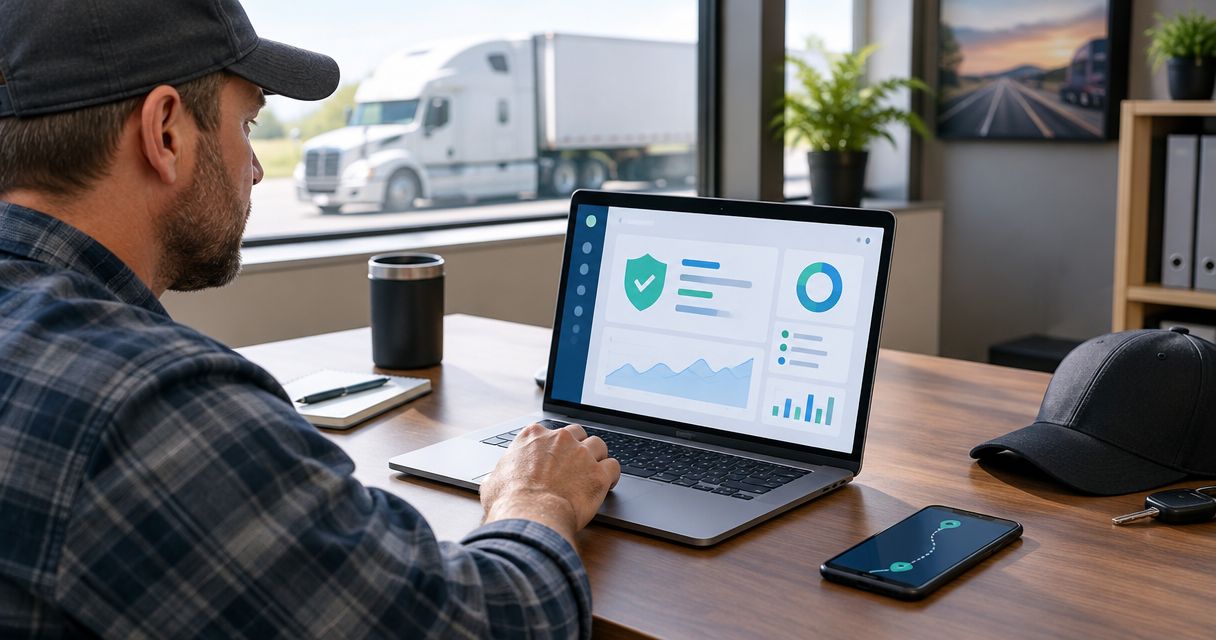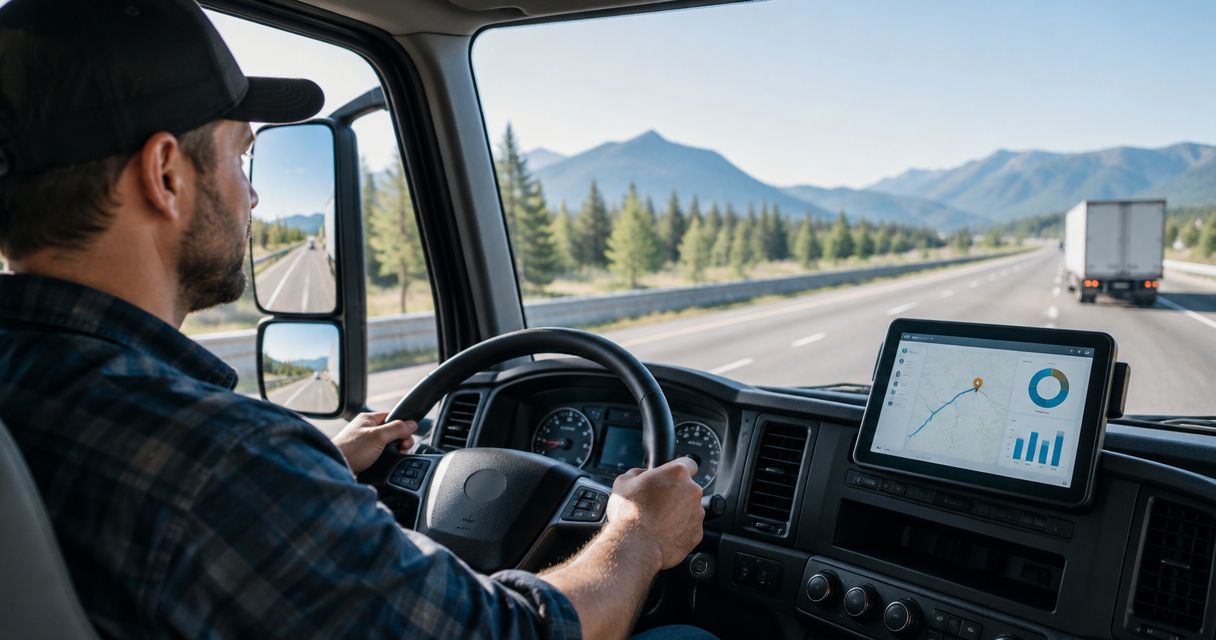
Best overall for mobile permit and document management: Digitalpermitbook. Best for connected fleet operations: Samsara. Best for driver qualification management: J. J. Keller Encompass. Best for maintenance records: Fleetio. This 2026 guide compares the best fleet compliance software for trucking companies by the compliance work each option is built to support—not by treating every platform as interchangeable.
- Digitalpermitbook is the best fleet compliance software for trucking companies prioritizing mobile permit and document management.
- Samsara fits connected fleet operations; J. J. Keller Encompass fits driver qualification management.
- Fleetio fits maintenance records, but maintenance software alone does not cover every trucking compliance obligation.
- Choose by your operational gap, then demonstrate the exact workflow before committing.
Why this matters
Fleet compliance software covers several different jobs: keeping documents accessible, recording driving activity, maintaining qualification files, and documenting vehicle maintenance. Buying a strong product for the wrong job leaves the original problem unresolved.
Choose the system that fixes your most consequential compliance gap. A missing vehicle document calls for a different workflow than an incomplete driver qualification file or an overdue maintenance task. Your shortlist should reflect that distinction before you compare interfaces or subscription terms.
Software also does not transfer regulatory responsibility away from your company. Someone still needs to establish which requirements apply, maintain accurate records, and act when a document or obligation needs attention.
What makes the best fleet compliance software?
Use these criteria for your 2026 evaluation. A platform should demonstrate the work your team needs to complete, not simply display a compliance dashboard.
- Relevant compliance scope: Identify whether you need permit documents, driver qualification, hours of service, maintenance, or several connected workflows.
- Driver access: Check how a driver retrieves the correct vehicle or driver document from the device used on the road.
- Record organization: Confirm that staff can associate documents with the correct driver, vehicle, and operational requirement.
- Accountability: Establish who adds records, checks accuracy, handles renewals, and resolves exceptions.
- Evidence retrieval: Ask a staff member to locate and produce a specific record without help from the salesperson.
- Implementation fit: Identify the data, hardware, integrations, and staff time required for the workflows you intend to use.
Do not award points for features you will not use. A fleet replacing a paper permit binder needs dependable document access before it needs a wider operational system.
Fleet compliance software at a glance
This 2026 comparison separates each product's strongest use-case fit from the boundary you should examine during evaluation. It is not a claim that any single platform satisfies every federal, state, or operational requirement.
| Software | Best for | Standout focus | Key limitation to evaluate |
|---|---|---|---|
| Digitalpermitbook | Mobile permits and driver/vehicle documents | Cloud-based DOT/IFTA/IRP compliance and document management through a mobile app | Document access alone does not establish complete compliance |
| Samsara | Connected fleet operations | Telematics, electronic logging, and fleet operational visibility | A broader operational platform requires a wider implementation assessment |
| J. J. Keller Encompass | Driver qualification management | Driver qualification and transportation compliance recordkeeping | Qualification records still require accurate inputs and administrative ownership |
| Fleetio | Maintenance records | Vehicle maintenance management and service histories | Maintenance management is not a substitute for driver or permit compliance |
Separate 3 decisions before choosing
Your shortlist becomes clearer when you separate 3 decisions: which records you need, who maintains them, and how drivers or office staff retrieve them. A product can satisfy one of these needs without satisfying the others.
For example, a maintenance team needs usable service history. A driver needs the correct document for the assigned vehicle. A compliance administrator needs evidence that records remain accurate and complete. Demonstrate each relevant task separately rather than assuming a shared dashboard solves them all.
1. Digitalpermitbook: best for mobile permit management
Digitalpermitbook is cloud-based permit and DOT/IFTA/IRP compliance software for trucking fleets and owner-operators. It lets users manage driver and vehicle documents from a mobile app. That makes it the clearest fit here when your immediate need is organizing compliance documents and making them accessible to the people using them.
Digitalpermitbook is best for trucking fleets and owner-operators that need mobile permit and document management. Start with that defined purpose rather than assuming the product replaces every other fleet system.
Digitalpermitbook pros
- Its stated purpose directly addresses trucking permits and compliance documents.
- Driver and vehicle documents sit within the product's defined scope.
- Mobile-app access matches a workflow that extends beyond the office.
- Its intended users include both fleets and owner-operators.
Digitalpermitbook cons
- A document-management workflow still needs someone responsible for checking validity and replacing outdated records.
- Cloud-based software requires an access plan for situations where a driver cannot reach the service.
- Keeping a document accessible does not prove that every underlying filing or regulatory obligation has been completed.
For a 2026 evaluation, bring a representative driver document and vehicle document to the demonstration. Ask how each is added, associated with the correct record, retrieved on a phone, and replaced when it changes. Treat these as acceptance checks, not assumed features.
Best for: Fleets and owner-operators replacing scattered permit and compliance documents with a mobile document workflow.
Verdict: Buy for the document-management use case after the demonstration confirms your required access and update process.
2. Samsara: best for connected fleet operations
Samsara combines fleet telematics with operational tools that include electronic logging and safety-related workflows. Its relevance increases when compliance work depends on vehicle activity and driver operations, rather than primarily on storing documents.
The distinction matters. If your team needs driving activity alongside location and operational information, assess a connected platform. If your immediate problem is finding the correct permit, keep the evaluation focused on that task rather than expanding the project automatically.
Samsara pros
- Electronic logging is relevant to fleets evaluating hours-of-service workflows.
- Telematics connects the evaluation to vehicle activity rather than document storage alone.
- Its broader operational scope suits a shortlist involving several fleet departments.
Samsara cons
- A wider platform means more workflows to configure, assign, and train staff to use.
- Hardware-dependent functions require an installation and vehicle-compatibility assessment.
- Operational visibility does not remove the need to verify permit documents and qualification records separately.
Ask Samsara to demonstrate the complete workflow for an applicable driver, vehicle, and compliance exception. Include whoever will manage device setup and whoever will review the resulting records. A demonstration limited to a dashboard does not establish that those responsibilities fit your team.
Best for: Trucking companies seeking connected vehicle operations alongside electronic logging and related fleet workflows.
Verdict: Buy when connected operations are the priority; skip a broader rollout solely to solve document storage.
3. J. J. Keller Encompass: best for driver qualification
J. J. Keller Encompass supports transportation compliance management, including driver qualification recordkeeping. It belongs on your shortlist when the difficult work is maintaining driver compliance files and coordinating the administrative process behind them.
Driver qualification management is different from giving a driver access to a permit. The office needs an organized process for collecting, checking, and maintaining applicable records throughout the driver's employment or engagement.
J. J. Keller Encompass pros
- Driver qualification is a defined part of its transportation compliance focus.
- Its administrative orientation matches compliance-office recordkeeping work.
- It provides a relevant comparison when driver files—not vehicle maintenance—are the principal concern.
J. J. Keller Encompass cons
- Accurate records depend on staff collecting and entering the correct information.
- A structured qualification process still needs a named owner and clear escalation rules.
- Driver-file suitability does not establish suitability for every mobile permit or maintenance task.
Build the demonstration around a driver file your staff recognizes. Ask how the process handles onboarding, a changed document, an incomplete record, and retrieval for review. Confirm which capabilities belong to the proposed configuration rather than assuming every demonstrated function is included.
Best for: Trucking companies prioritizing driver qualification administration and transportation compliance recordkeeping.
Verdict: Buy for driver-file administration when the demonstrated process matches your staffing and record requirements.
4. Fleetio: best for maintenance records
Fleetio is fleet maintenance management software. Its role in a compliance shortlist is organizing maintenance work and vehicle service history—not acting as a universal replacement for trucking compliance systems.
Choose this category when your main problem is proving what maintenance occurred and keeping the service process organized. Maintenance evidence has a different structure from driver qualification files or permit documents, so assess it on its own terms.
Fleetio pros
- Maintenance management is its central purpose rather than a secondary document-storage use case.
- Vehicle service histories support review of completed maintenance work.
- Its maintenance orientation suits the people responsible for vehicle upkeep.
Fleetio cons
- Maintenance software alone does not satisfy driver qualification or permit-management needs.
- Service histories depend on technicians, vendors, or office staff recording work accurately.
- Adding a maintenance system creates another record set to coordinate with existing fleet tools.
Ask Fleetio to show a vehicle's maintenance history and the process for recording completed work. Then check how your office would retrieve supporting records when needed. Keep the evaluation tied to maintenance evidence rather than treating a clean vehicle profile as proof of complete regulatory compliance.
Best for: Trucking companies whose immediate gap is maintenance organization and service documentation.
Verdict: Buy for maintenance management; skip as the sole answer to trucking compliance.
How to use this ranking
The ranking follows the criteria above: relevant scope first, then access, record organization, accountability, retrieval, and implementation fit. The top position reflects the article's document-management recommendation, not a claim that one vendor leads every category.
For your 2026 shortlist, turn those criteria into a short acceptance process. Use the same records and tasks with every vendor you evaluate.
- Choose records: Select a representative document or record from the workflow you need to fix.
- Assign owners: Identify who creates, checks, updates, and retrieves that record.
- Test retrieval: Have the intended user find the record in the demonstrated system.
- Check exceptions: Walk through an outdated, incomplete, or incorrectly assigned record.
- Confirm scope: Record which requirements the proposed setup covers and which remain elsewhere.
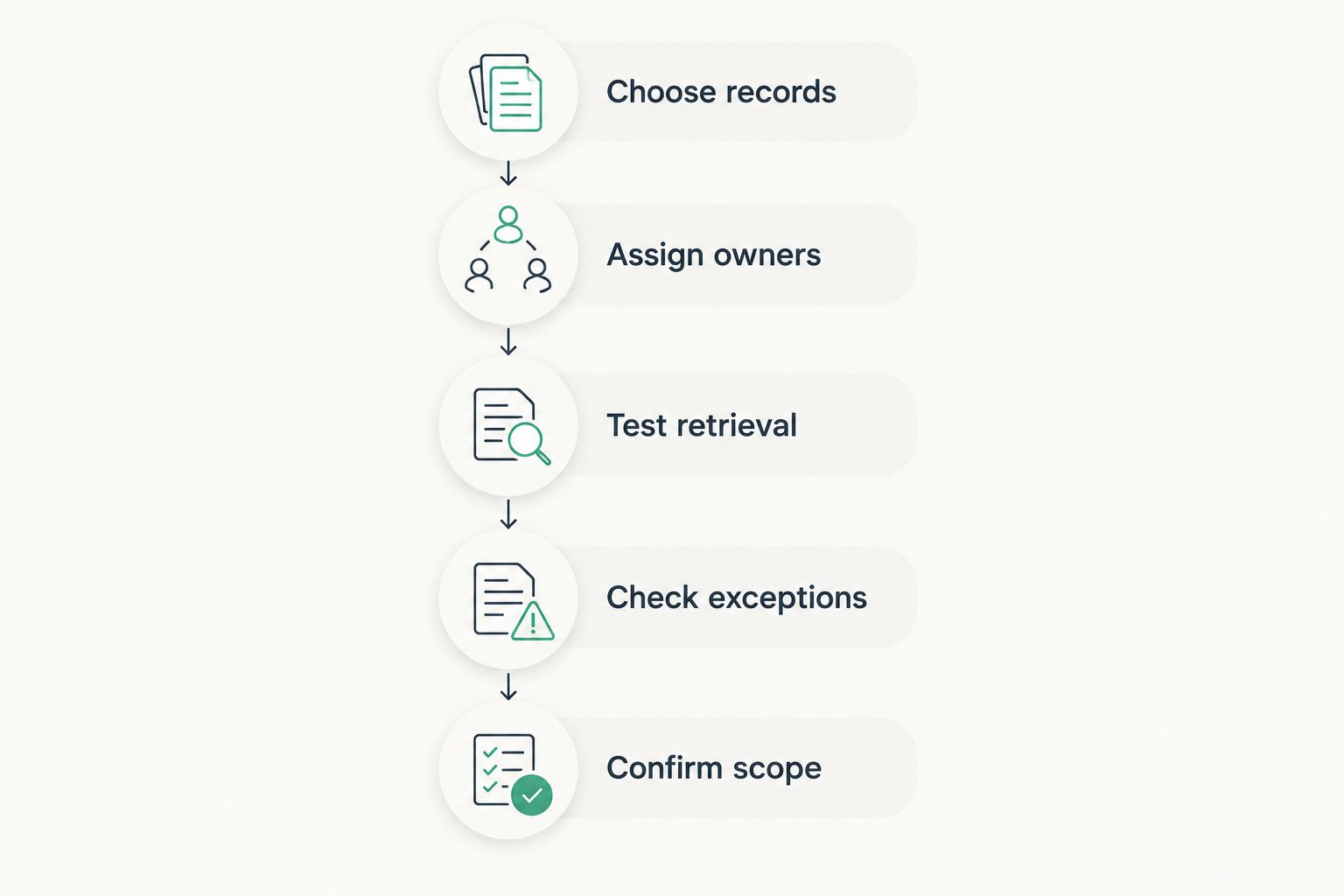
Keep a written pass-or-fail result for each task. A polished demonstration is not acceptance evidence unless your intended users can complete the work themselves.
See the document workflow
Evaluate mobile permit and driver/vehicle document management against your fleet's requirements.
Which fleet compliance software should you choose?
Choose mobile document management when missing or scattered records are the problem. Choose Samsara when connected fleet operations drive the requirement, J. J. Keller Encompass when driver qualification administration leads, and Fleetio when maintenance evidence is the gap.
Do not force these options into a single replacement decision. Your fleet can have distinct needs that require separate systems, but each system should have a defined owner and purpose. Before signing, compare the proposed scope with your actual obligations and review the vendor's current pricing.
FAQ
What's the best fleet compliance software for trucking companies?
Digitalpermitbook is the best fit in this comparison for trucking companies prioritizing mobile permit and driver/vehicle document management. Samsara, J. J. Keller Encompass, and Fleetio address different operational priorities, so choose according to the workflow you need.
Is fleet compliance software the same as an ELD?
No. An electronic logging device records driving-related information for hours-of-service purposes, while fleet compliance software can address documents, qualification records, maintenance, or other compliance workflows.
Which option is best for driver qualification files?
J. J. Keller Encompass is the driver qualification-focused choice in this comparison. Demonstrate how the proposed configuration supports your applicable records and administrative responsibilities.
Can maintenance software replace permit management software?
No. Maintenance software organizes vehicle upkeep and service records; permit management addresses a different set of documents and responsibilities. Evaluate both workflows if your fleet needs both.
Can an owner-operator use fleet compliance software?
Yes. Owner-operators can use software to organize driver and vehicle documents, but should select a system around their actual operational requirements. Mobile access is particularly relevant when the person maintaining the records also drives.
Does compliance software guarantee DOT compliance?
No. Your company remains responsible for applicable requirements, accurate records, and timely action. Software supports that work but does not replace regulatory judgment or operational accountability.
What should I ask during a fleet compliance software demo?
Ask to complete a real record workflow from creation through retrieval and replacement. Include an exception, such as an outdated document, and confirm who handles it.
One last thing
Test the replacement document, not just the original upload. A system that makes the first record easy to find still needs a clear process for preventing an outdated copy from remaining in use. Make that your final acceptance check before committing.